Credit scores for decades have been based mostly on borrowers’ payment histories. That is about to change.


The new law has a long name – Economic Growth, Regulatory Relief, and Consumer Protection Act – but the outcome is simple. When the law takes effect in September, Equifax, Experian and TransUnionmust each set up a webpage for requesting fraud alerts and credit freezes. The FTC will also post links to those webpages on IdentityTheft.gov.
And if you’re in the military, there’s more. Within a year, credit reporting agencies must offer free electronic credit monitoring to all active duty military.
The new legislation will make placing, lifting, and permanently removing freezes free no matter where you live. It also requires consumer rating companies to fulfill your request within one business day if made online or over the phone, and within three business days if requested by mail.
The changes will take effect about four months after the bill is signed.
To set up your own credit freezes, go to the freeze page at each credit agency’s website individually: Experian, Equifa
If you suspect identity theft may have impacted your credit reports, you have important rights under federal and New York law. Call our firm today!
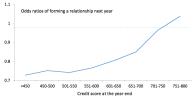
While it may not surprise you that having good credit contributes to one’s general attractiveness, recent data suggests that relationship seekers prioritize high credit scores to a surprising degree over more traditional markers of attractiveness, such as having a nice car or holding a high-status career. Match.com’s Chief Scientific Advisor, Helen Fisher, suggests that we have a biological imperative to seek out those who are financially responsible, as they will make for reliable mates.

Criminal background checks are commonplace Applications for certain employment positions. But what about credit checks? Is a job applicant’s credit history relevant for employment? May an employer lawfully check a job applicant’s credit?
State and local laws are becoming more restrictive, adding an extra layer of protection for consumers over and above the federal Fair Credit Reporting Act.
https://www.bna.com/credit-checks-employees-b73014462639/

Tens of thousands of people who took out private loans to pay for college but have not been able to keep up payments may get their debts wiped away because critical paperwork is missing.
The troubled loans, which total at least $5 billion, are at the center of a protracted legal dispute between the student borrowers and a group of creditors who have aggressively pursued them in court after they fell behind on payments.
Judges have already dismissed dozens of lawsuits against former students, essentially wiping out their debt, because documents proving who owns the loans are missing. A review of court records by The New York Times shows that many other collection cases are deeply flawed, with incomplete ownership records and mass-produced documentation.

This is part four of a four-part series that looks at how inaccurate credit reporting is being fought by attorneys, the CFPB, and state AGs.
CFPB Nails Credit Repair Doctors: The credit bureaus not only make mistakes, they fail to conduct adequate reinvestigations of disputes or remove inaccurate information. Instead of complying with these FCRA responsibilities, the bureaus have developed their own lucrative direct-to-consumer channel for selling credit monitoring and identity-theft services to concerned consumers. But, the credit bureaus are so sloppy they’ve also fomented (spawned) an entire add-on predatory industry — last-dollar credit repair doctors — that takes advantage of the heightened consumer interest in higher credit scores that’s been driven by the bureaus’ scare-tactic marketing of their own absurdly-priced monitoring products. This week, the CFPB announced penalties of $2 million against 4 California-based credit repair doctors that “charged illegal fees and misled consumers about their ability to fix their credit.” These “doctors” falsely claimed they could “repair” your credit. Of course, no one can remove accurate, negative information.

About 12 million people will get a lift in their credit scores next month as the national credit reporting agencies wipe from their records two major sources of negative information about borrowers: tax liens and civil judgments.
The change stems from a lengthy crusade by consumer advocates and government officials to force the credit bureaus to improve the accuracy of their reports, which are often speckled with errors and outdated information. Those mistakes can limit borrowers’ access to credit cards, auto loans and mortgages, or saddle them with higher borrowing costs.
Starting July 1, the three major credit reporting companies — Equifax, Experian and TransUnion — will enforce stricter rules on the public records they collect, requiring each citation to include the subject’s name, address and either their Social Security number or date of birth. Nearly all civil judgments and at least half of the nation’s tax lien records do not meet the new standards, and will be eliminated from consumer credit reports.
You can read the full article here.

As the CRCs roll out improvements under NCAP [National Consumer Assistance Plan], tax lien and public records data that historically was used to calculate consumers’ credit scores likely will be eliminated entirely or in part.
With those changes in mind, VantageScore 4.0:
– Distinguishes medical collections from other types of collection accounts, ignores medical collections less than six months old (to allow time for insurance-payment processing) and penalizes medical collections less than non-medical ones.
– Relies less on derogatory collections and public-records data to ensure that the model will not lose substantial predictive strength in the likely event that these records fail to meet enhanced data quality standards and are removed from consumer credit files under provisions of the NCAP program.