

Category Archives: Identity Theft

Identity Theft and Credit Report Errors After a Data Breach

Canvas breach and identity theft and credit report errors

Identity theft and credit report errors often begin with a breach that looks distant at first. A school platform gets hit. An old account shows up in the news. Names, emails, student IDs, or messages may be exposed, and a lot of people think, “At least it was not my Social Security number.” That reaction makes sense, but it can also cause people to relax too soon.
A data breach does not have to hand over every private detail to create problems later. Sometimes the first exposed piece is only an email address or an ID number. Then a scammer uses it to make a message look familiar. From there, one bad click or one fake login page can lead to a much bigger mess.

Why identity theft and credit report errors can start small

Most people imagine identity theft as one dramatic moment. A stolen wallet. A hacked bank account. A credit card opened overnight.
Real life is often slower than that.
A breach can put basic information into circulation, and basic information is useful when someone wants to sound believable. A student might receive a message that appears tied to a school account. A parent might get a notice that feels urgent. A former employee might see a login alert and assume it is routine.
That is where the risk begins. Once someone gives away a password, confirms a code, or opens the wrong attachment, the situation can move from exposed data to actual misuse. After that, identity theft and credit report errors may not show up right away. They may appear weeks or months later when a lender pulls a report.

A breach notice is not the end of the story

A breach notice can make people feel like the problem has already happened and ended. The notice is often just the first public sign that personal information may have been exposed.
Here is the part people miss. Exposed data can be reused.
An email address can help with phishing. A message history can give a fraudster context. Even when passwords or Social Security numbers are not part of the confirmed breach, people should still treat the situation as a warning sign, not as background noise.
That does not mean panic. It means slow down, check accounts, update weak passwords, and watch for strange activity.

When exposed data turns into credit damage

The credit report problem usually starts when someone uses another person’s information to open or access an account. If bills go to a changed address, the real person may never see the account activity. No bill arrives. No warning letter shows up. The first real clue may be a collection notice or a denied application.
By then, the report may already show a late payment, charge-off, collection, inquiry, or account that does not belong there.
That is why identity theft and credit report errors are so frustrating. The victim is not just dealing with fraud. The victim is dealing with a record that now makes them look financially careless. A bank, landlord, car dealer, or employer may not know the story behind the bad information. They just see the report in front of them.

What to check after a breach affects a platform you use

Start with the simple things first. Change the password on the affected account. Turn on multifactor authentication when it is available. If passkeys are an option, they can reduce the risk that a stolen password causes more trouble.
Then look at the inbox. Strange messages matter, especially if they mention the affected platform, ask for account confirmation, or push you to click quickly. Scammers like urgency because it keeps people from thinking.
After that, check credit reports. Do not only look for new accounts. Look for unfamiliar inquiries, addresses you do not recognize, strange name variations, wrong balances, and collection activity. Small mismatches can be the first clue that someone else’s activity has been tied to your file.
A credit freeze may also make sense when you are not actively applying for new credit. It is not a magic shield, but it can make it harder for someone to open new credit in your name.

Do not treat a wrong credit report like a minor typo

A misspelled name is annoying. A fraudulent account is different. A collection tied to identity theft is different. A false delinquency that blocks a mortgage or car loan is different.
Those errors need a paper trail.
Save the breach notice. Save suspicious emails. Save denial letters, account screenshots, dispute records, collection notices, and credit report copies. Keep dates. Write down who you spoke with and what they said. This can feel excessive in the moment, but it helps when the same bad information keeps coming back.
The goal is not just to complain. The goal is to show what is wrong, why it is wrong, and how it has affected you.

When the cleanup does not clean everything up

Some errors are corrected after a dispute. Others are not. One credit bureau may remove the account while another keeps reporting it. A creditor may verify information that should have been investigated more carefully. A collection may disappear for a while and then return with a new agency name attached to it.
That is when people get worn down.
Still, repeated reporting of false information should not be ignored. If identity theft and credit report errors continue after you have disputed them, the problem may call for a stronger response. Accuracy matters because credit reports are used for decisions that affect ordinary life. Housing. Loans. Interest rates.
If exposed data has turned into false accounts, denials, or reporting that will not stay fixed, start with help for identity theft and credit report errors and focus on getting the record corrected before the damage keeps spreading.
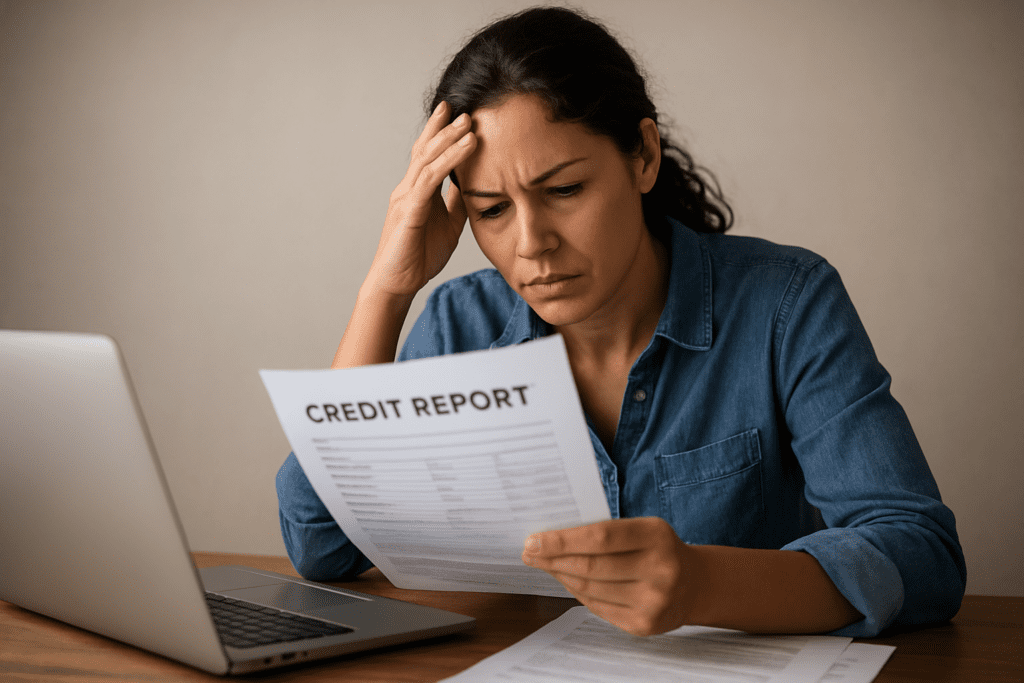

Protection from Errors in Credit Reports and Identity Theft

A concerned person reviewing a credit report with a laptop and documents on a table

Identity theft is not just a pocket full of identity or a stolen password—it’s a hijacking of your financial position. When other individuals use your information to open up new lines of credit, take out loans, or make purchases, the deceit will typically occur where it can most damage your finances: your credit report. Those unauthorized transactions will devastate your credit rating, stall loan approvals, and take years of frustration to rebuild your fiscal reputation.

Most victims, however, won’t even know they are victims until the day they get rejected credit or learn there is an inauthentic account appearing on their report. The better news is that seeing how identity theft and credit report errors are interconnected can enable you to spot, prevent, and fix things before it all gets to the breaking point.

How Identity Theft Leads to Credit Report Inaccuracies

Credit reporting agencies—Experian, Equifax, and TransUnion—obtain their information from lenders and public records. When you or someone else uses your information for identity theft, their activities can result in inaccurate information, such as:

  • Illegal credit accounts
  • Late payments that you have never made
  • Collection accounts for debt that does not exist and that you are not obligated to pay
  • Incorrect employer reports or addresses

Even tiny discrepancies—a misspelling of your name or an odd address—are indicators of bigger problems. If incorrect information has been put into your file, it’s been shared far and wide, and it requires some more hustle to correct it.

Discovering the Red Flags of Identity Theft

Identity theft leaves a paper trail. Red flags can be:

  • Collections or bills on accounts you know nothing about
  • Unexpected drops in your credit score
  • Denials of credit based on non-current financial history
  • You see inquiries on your credit reports that you never approved

If you see any of the above, it’s best to take action early. Delaying will result in more fraud or missed opportunities to correct earlier.

The Emotional and Financial Consequence of Credit Report Mistakes

Identity theft is more than numbers on a report. A poor credit report can bring about:

  • Higher interest rates on future loans
  • Hard time getting a job or home
  • Higher insurance premiums
  • Emotional suffering and distrust of financial institutions

Depending on the extent of the scam and how aggressively working creditors and reporting agencies follow up, it will take years or months to reverse the damage.

How to Shield Your Credit Report Against Identity Theft

Be ahead. Here’s how to safeguard your credit in advance:

  • Monitor Your Credit Periodically: Obtain free annual reports from all three bureaus at AnnualCreditReport.com. Inspect them for unfamiliar accounts or outdated information.
  • Authorization Fraud Alert or Freezes
  • Fraud Alert: Instructs lenders to verify identity prior to offering new credit.
  • Credit Freeze: Bars new account openings of credit without your awareness by locking your credit report.
  • Practice Good Security Habits: Make data private online and offline. Use good passwords, two-factor authentication, and never send confidential data on unsecure websites or via email.
  • Report the Stolen or Lost IDs as Early as Possible: Notify the bank, creditors, and the FTC at IdentityTheft.gov to construct a proper recovery plan.
  • SafeGuard Financial Records: Shred old statements and guard sensitive papers.

Repairing Credit Report Damage Inflicted by Identity Theft

If you’ve already been victimized, don’t panic—there’s a clear path to correction:

File a Police Report and FTC Complaint
These reports are proof that the fraudulent action was beyond your control.

Write to the Credit Bureaus
Send dispute letters to all three bureaus with each item incorrectly listed. Include copies of your FTC report, police report, and identification.

Notify Creditors and Debt Collectors
Notify companies that published incorrect reports. Do written follow-up to verify accounts closed or erased.

Follow Up
Bureaus resolve cases in roughly 30 days. Make meticulous records of all contact, including dates, names, and case numbers.

Tags Corrections

After you make corrections, take new printouts of your reports so you can verify mistakes were fully erased.

At other times, even after being reported and complained about, the bureaus or creditors are intransigent or careless. You have a right to correct reporting under the Fair Credit Reporting Act (FCRA) as well as a right to immediate correction of verified errors.

A consumer attorney can:

  • Negotiate with credit bureaus and creditors on your behalf
  • Enforce FCRA time limits
  • Litigate for damages where negligence caused money losses
  • Professional intervention can speed it up and protect your rights.

Securing Your Future

Identity theft can occur to anyone, but brains and knowledge put you in the know. Having your reports close, protecting your data, and acting fast when it occurs will preserve your credit and your sanity.

Where prevention is impossible, keep in mind that the law is out there to take care of you—and professionals at Grady CPA will restore your credit worth and trust.
Your credit is not a figure—your credit reputation is. Handle it gently as if it were irreplaceable, because it is.

Fixing Credit Report Errors and Protecting Yourself from Identity Theft

person reviewing credit report with concern

Mistakes on your credit report aren’t just annoying—they can cost you real money. Whether it’s a loan denial, a surprise drop in your credit score, or bills from accounts you didn’t open, these errors can leave you dealing with long-term financial consequences. In many cases, the root cause is identity theft—or a simple mistake that never got fixed.

Knowing your rights, and how to act on them, can help you set things right.

When Errors Go Beyond Typos

It’s not unusual to find outdated or inaccurate information in your credit file. Maybe your name is spelled wrong, an account was marked “late” when it wasn’t, or you’re listed at an address you’ve never lived at. These details might seem harmless—but lenders don’t see them that way.

Worse, if you notice accounts you never opened or debts that don’t belong to you, it could be a sign that someone has stolen your identity.

Here are a few warning signs that something may be wrong:

  • Credit cards or loans you didn’t apply for
  • Collections notices for debts you don’t recognize
  • Sudden changes in your credit score
  • Lenders pulling your credit without your request
  • Personal info—like your address or Social Security number—listed incorrectly

These issues can derail job applications, rental agreements, or major purchases if not resolved quickly.

How Identity Theft Happens (and What It Looks Like)

Identity theft doesn’t always start with a big hack. Sometimes, it’s as simple as someone stealing mail from your mailbox or phishing for personal data online. Once they have your information, they can open credit lines, take out loans, or rack up charges in your name.

The damage might not show up until months later—often when you apply for credit or get a call from a debt collector.

Your First Steps Toward Fixing It

Start by pulling your credit reports from all three major credit bureaus: Equifax, TransUnion, and Experian. You’re entitled to one free report per year from each bureau at AnnualCreditReport.com. Check each one carefully for red flags—like unknown accounts or incorrect payment statuses.

If you notice anything suspicious, act quickly:

  1. File an identity theft report at IdentityTheft.gov
  2. Place a fraud alert or freeze on your credit
  3. Contact the companies where the fraud occurred
  4. Dispute incorrect items with the credit bureaus

Make sure to keep a paper trail. Save all your letters, reports, and documentation.

Your Rights Under Federal Law

You don’t have to fight these issues alone. The Fair Credit Reporting Act (FCRA) gives you the right to:

  • Dispute inaccurate information
  • Have incorrect or unverifiable data removed
  • Be notified of the results within 30 days
  • Sue credit reporting agencies or furnishers who break the rules

If your dispute is ignored, if the investigation is sloppy, or if the same mistake keeps showing up, you may be able to take legal action. That can include actual damages, legal fees, and in some cases, additional compensation.

When to Get Legal Help

Fixing errors isn’t always simple. Sometimes, credit bureaus don’t investigate properly. Other times, lenders “verify” accounts without checking their records. This can leave you stuck—especially if it keeps happening.

An attorney who knows the FCRA can help by:

  • Writing effective dispute letters
  • Demanding full investigations
  • Holding credit bureaus and furnishers accountable
  • Filing lawsuits when necessary

Most attorneys in this space offer free consultations, and many don’t charge unless you win.

Keeping Future Problems at Bay

Once your report is fixed, staying vigilant is key. Protect yourself by:

  • Checking your reports regularly
  • Using two-factor authentication
  • Shredding financial mail
  • Being cautious with what you share online
  • Signing up for credit monitoring if needed

Catching small problems early can help you avoid big ones down the road.

If you’re struggling with inaccurate credit reports or signs of identity theft, don’t ignore it. These problems can follow you—and affect your creditworthiness for years. Federal law gives you tools to protect your name, your finances, and your future.

To learn more about how to fix credit reporting issues and protect your identity, visit the Identity Theft and Credit Report Errors resource page.

How to Spot and Resolve Identity Theft-Related Errors on Your Credit Report

identitythefterrors

Identity theft is one of the most troubling experiences a consumer can face, often leaving victims not only emotionally shaken but also burdened with complicated financial consequences. When an identity thief uses your personal information to open fraudulent credit accounts, it can quickly lead to errors on your credit report. These inaccuracies may impact your ability to secure a loan, rent an apartment, or even land a job. Fortunately, understanding the warning signs, knowing your rights, and taking prompt action can help you restore your credit health. This article will discuss the basics of identity theft, how to identify and dispute credit report errors, and the legal protections available to help you get back on track.

Understanding Identity Theft and Its Impact on Your Credit

Identity theft occurs when someone obtains and uses your personal information—such as your Social Security number, credit card details, or bank account information—without your permission. This can lead to financial harm, including unauthorized charges on your credit cards, new loans opened in your name, and stolen tax refunds.

These fraudulent activities often appear on your credit report as unfamiliar accounts, unauthorized inquiries, or delinquent payments. Over time, these errors can significantly lower your credit score, making qualifying for favorable interest rates or even essential financial products harder. The longer these inaccuracies go unaddressed, the more damage they can do.

Common Warning Signs of Identity Theft in Your Credit Report

Reviewing your credit report is a crucial first step if you suspect you’re a victim of identity theft. Pay attention to the following red flags:

  1. Unrecognized Accounts: Look for accounts you don’t recall opening, such as credit cards, personal loans, or financing agreements with unfamiliar company names.
  2. Incorrect Personal Information: Note any misspellings of your name, unfamiliar addresses, or inaccurate employment information, which could indicate that a thief is using your identity.
  3. Unexplained Credit Inquiries: If you find inquiries from lenders you haven’t approached, it could mean someone else is applying for credit in your name.
  4. Unexpected Changes in Your Credit Score: A sudden drop in your credit score without explanation may signal fraudulent activity.

Steps to Take If You Suspect Identity Theft

Acting quickly is key to minimizing the damage:

  1. Report to the Authorities: File a report with the Federal Trade Commission (FTC) at IdentityTheft.gov. This will help create an official record of the theft.
  2. Contact the Credit Bureaus: Place a fraud alert on your credit file through one of the three major credit bureaus (Equifax, Experian, TransUnion). Once notified, that bureau will alert the others.
  3. Dispute Errors with Creditors and Bureaus: Send written disputes to the credit bureaus and the creditors. Provide copies of any supporting documentation and retain proof of your correspondence.
  4. Secure Your Accounts: Change passwords and PINs for all your financial and online accounts. Until the situation is resolved, consider enrolling in credit monitoring services or a credit freeze.

Legal Rights and Protections for Victims of Identity Theft

Under the Fair Credit Reporting Act (FCRA), consumers can dispute and correct inaccuracies on their credit reports. Credit bureaus and creditors must investigate these disputes and remove or correct any erroneous information.

The Fair Debt Collection Practices Act (FDCPA) also protects you from being harassed by debt collectors trying to collect on fraudulent accounts. Understanding and exercising these rights is essential if identity thieves have targeted you.

How Credit Report Law Group Can Help

Dealing with identity theft can be a complex, time-consuming process. At Credit Report Law Group, we specialize in credit reporting disputes and can help guide you through every step of the process. From preparing dispute letters and negotiating with creditors to working with the credit bureaus on your behalf, our experienced team ensures that your interests are represented and your rights are protected.

Preventing Identity Theft in the Future

While no one can guarantee complete immunity from identity theft, taking proactive measures can reduce your risk:

  • Use Strong, Unique Passwords: Enable multi-factor authentication whenever possible.
  • Protect Sensitive Documents: Shred financial documents and consider using a locked mailbox.
  • Monitor Your Credit Regularly: Request free annual credit reports and monitor any sudden changes.

By staying vigilant, knowing your rights, and seeking professional help, you can address identity theft-related errors and restore your financial well-being.

Need legal assistance dealing with credit report errors? Click here or contact Credit Report Law Group at 631-253-8742

Wells Fargo Fake Accounts Plague Consumers

Wells Fargo Storefront

In 2016, Wells Fargo made headlines when it paid $110 million to settle a class action lawsuit and another $185 million in fines relating to allegations that the bank had created as many as 2 million accounts for customers without getting their permission to do so. Then, in December 2022, it paid a whopping $3.7 billion to settle claims involving 16 million accounts. Now Wells Fargo is in the news again, and it’s once more about fake accounts. But this time, Wells Fargo may be one of the victims of the wrongdoing. Or not….

Consumers Learning of Fake Accounts

According to NBC News, since 2022, a few dozen consumers have filed complaints with the Consumer Financial Protection Bureau that they’ve learned they have unapproved accounts with Wells Fargo. However, unlike those caught up in the earlier account scandal, these consumers weren’t already customers with Wells Fargo. Instead, they had no prior connection with the bank.

Some learned of the fake accounts by accident. Still others received notices from Wells Fargo. And some of these accounts had several thousand dollars flowing in and out of them—with some bounced transactions, too.

Synthetic Identity Theft

Experts reviewing the consumers’ complaints informed NBC News that the likely explanation is that the consumers are victims of “synthetic identity theft.” Unlike traditional identity theft, when someone poses as another person by using their information, with synthetic identity theft, a scammer cobbles together some people’s real information with fake data. While it can be a complicated con (that takes years in the making), once the fake identity is created, it’s easier for the scammer to use because they can continue to change the contact information and other data to best suit their scam. At the same time, the mix of fake and real data means it’s easier for synthetic identities to be used without detection.

Is Wells Fargo Responsible?

At first glance, it would seem that Wells Fargo is, along with the consumers themselves, a victim. However, one of the impacted consumers is suing Wells Fargo and Early Warning, a company co-owned by Wells Fargo and other banks that runs the Zelle payment service and collects data for identification services. In the lawsuit, the consumer alleges that Wells Fargo and Early Warning stole his data and verified the false transactions as his—therefore damaging his credit.

There’s no way to know what the outcome of the lawsuit will be, but the incident should remind all consumers of certain key facts:

  • It’s important to regularly check your credit report for any false accounts or other errors.
  • If you learn of any fake accounts, put an alert on your credit reports as soon as possible.
  • Be careful allowing any institution access to your banking information because it’s possible that they may circulate it to other entities without your knowledge.
  • Financial entities should be vigilant about the security of their records; if they are aware of errors, they should notify you and correct them. If they fail to do so, they may be liable for damages.

That’s why, if you have had any issues with identity theft or other issues with incorrect information on your credit report, contact an attorney as soon as possible. The Credit Report Law Group can help you correct your credit record and obtain compensation for any damages you have sustained.

The Pitfalls of “Credit Repair”

Credit History

In June 2023, the New York Times Sunday Magazine looked inside the chaotic world of “credit repair” companies. The feature tells the story-after-story of how bad credit can ruin people’s financial lives—pushing them to the brink, financially and psychologically. It reveals how credit scores have ties to serious racial and sociological inequity. It explores how the credit industry has largely evaded efforts to be limited or regulated in its ability to make money off selling American consumers’ information—sales that Americans have essentially little control over, while the bureaus financially benefit by hurting Americans’ financial well-being.

All of that is gut-wrenching, but what is perhaps the most stunning is the article’s portrayal of the “credit repair” industry—how individuals who seek help with credit problems are being exploited and robbed by the very people who are pretending to help them.

As the article explains, even those well-intentioned individuals who genuinely want to help people struggling with bad credit seem to have little-to-no training or expertise in accounting, document management, or even how to challenge credit reports. Yet they charge people already struggling with debt $100 or more monthly for credit services.

But things rapidly go downhill from there.

The article also reveals how many of the “credit repair” companies are, unbeknownst to their clients, using illegal tactics to address credit reports—such as falsifying statements to law enforcement as a way to challenge clients’ data.

Further, some of these companies are nothing more than scammers, defrauding clients and even stealing their data —committing identity theft when they were supposed to protect clients from it.

As the article addresses, there are various cases before federal agencies and some members of Congress discussing the need for reform. But there seems to be negligible progress on that front. In the meantime, individuals need to realize that the credit repair firms are not credentialed, unregulated, and—after all that, they aren’t even good at fixing someone’s credit.

That’s why it is so crucial to get competent representation from law firms such as The Credit Report Law Group.

The Credit Report Law Group is led by experienced licensed attorneys who are leaders in the credit reform community. They understand a consumer’s legal rights, so they can legitimately address errors in credit reports, debt harassment, identity theft, and more.

Another example of how unscrupulous “credit repair” companies operate is that they charge upfront without guaranteeing success. Legitimate advocates do not charge upfront. For example, the Credit Report Law Group takes most of its cases on a contingency basis, so clients don’t need to pay any money upfront—they only pay after a successful result.

While, as the New York Times reported, many credit repair companies rely on boilerplate complaints and deception to serve their clients, the Credit Report Law Group will carefully review your specific issues and develop a sound, effective legal strategy that best reflects your situation and needs.

That’s why, if you have had any issues with identity theft or other issues with incorrect information on your credit report, don’t risk a credit repair company. Instead, contact an attorney as soon as possible. The Credit Report Law Group can help you correct your credit record and obtain compensation for any damages you have sustained.

People of Polish Ancestry Should Check Their Credit Files

William Shakespeare famously wrote, “What’s in a name? That which we call a rose by any other name would smell as sweet.” But, for many of us, names are important since they give us our identity. Especially our last names. Surnames are a source of pride since they link us to our families and ethnic heritage. Polish names are no exception. There are over 400,000 distinct surnames in Poland, with the most popular being Nowak. In terms of commonality, this name is followed by Kowalski, Lewandowski, Kowalczyk, Kaminski, Zielinski, Szymanski, Koztowski, Jankowski, and Wojciechowski.

These Polish surnames are popular in the United States, too. Unfortunately, names of Polish descent are often mispronounced and frequently misspelled in this country. A misspelling is not only annoying, but it can have grave consequences when it comes to someone’s credit history. A misspelled name can lead to a mixed credit file. In addition, when someone’s surname is popular, a mixed credit file can occur.

What is a Mixed Credit File, and What Causes the Confusion?

A mixed credit file occurs when a credit reporting agency mistakenly commingles two people’s financial information. The problem can develop when two individuals have the same or similar name, or when there is a misspelling. A typo in a financial record or a Social Security number with an incorrect digit can also lead to a credit file mix-up between two people.

You should scan your credit file to see whether it lists any data that does not apply to you. If the file shows that your record has been mixed with someone else’s, you may be ineligible for credit. You may also receive a credit score that is lower than it should be. A mixed credit file can be a big problem.

You Need the Help of An Experienced Attorney

If you believe you have a mixed credit file, you can contact the credit reporting agencies, but they may not fix the problem fast enough. These agencies are famous for taking their time while consumers bear the brunt of their inaction. So don’t go it alone. Attorney Adam Singer at the Credit Report Law Group has experience challenging mixed credit files. He and his team aren’t afraid to take on a credit reporting agency to get you the remedy you deserve. Contact the Credit Report Law Group at 212-842-2428 or fill out this form.

Common French Surnames Can Cause Credit History Problems

The nation of France is known for its contributions to art and culture, from the architectural marvels of the Eiffel Tower and the Palace of Versailles to the fashion runways of Paris to the masterpieces in the Louvre Museum. And don’t forget the food and wine! The people of France have a lot to be proud of, and rightly so.

Those of French descent in the United States are also proud of their heritage, which is reflected in their surnames. There are over one million unique French surnames. The ten most common last names are Martin, Bernard, Robert, Richard, Durand, Dubois, Moreau, Simon, Laurent, and Michel. There are hundreds of thousands of people who share these names.

Given the number of people with these common last names, there are bound to be situations where one person is mistaken for another. One of these situations involves a mixed credit file, which can have drastic financial implications.

Mixed Credit Files and Common Financial Problems

When a credit reporting agency combines someone else’s financial data with your credit history, the result is a mixed credit file. These mix-ups can occur when two people have the same or similar names. Typos can also lead to mixed credit files. If a Social Security number has one wrong digit, or a name is misspelled, incorrect financial information may end up in your file.

People with mixed credit files can have serious financial problems. You may be ineligible for credit or be given a low credit score if someone else’s data makes its way into your file. You should review your credit file to see if it contains any information that does not apply to you.

An Experienced Attorney Can Pursue Relief for You

You must act if you are concerned that someone else’s financial details are included in your credit file. Although you can contact the credit reporting agencies about a mixed credit file, don’t expect immediate results. These companies do not act fast when it comes to repairing credit files. That is why you need an experienced advocate in your corner. Attorney Adam Singer at the Credit Report Law Group is that advocate. He and his team are well-versed in how credit reporting agencies operate, and they are willing to stand up for you and your rights. Contact the Credit Report Law Group at 212-842-2428 or fill out this form.

New Report Reviews the Biggest Data Breaches of 2022 (and so far, for 2023)

It’s astonishing how frequently revelations of a data breach have hit the news. But these events are so frequent they may get less media coverage than they warrant. That can hurt consumers—because if you’re not aware of breaches, you won’t know that your data has been compromised and take steps to protect yourself from identity theft. Therefore, it’s worth checking out this report on the biggest breaches revealed in 2022—and some of the biggest from 2023 so far.

US Department of Education

In March 2022, a hack meant 820,000 students in New York had their information stolen. The data theft included demographics, academic information, and economic profiles.

Apple and Meta

Though it wasn’t revealed until 2022, in 2021, Apple and Meta surrendered some customers’ data to law enforcement officials. But it turned out the data recipients weren’t truly law enforcement but hackers who had accessed police systems.

Cash App

In April 2022, the cash delivery app reported to the Securities and Exchange Commission that it had been breached in 2021, with 8.2 million customers’ data impacted.

SuperVPN, GeckoVPN, and ChatVPN

Theoretically, VPNs offer users a more secure method of using the internet. But that wasn’t the case for the 21 million customers of SuperVPN, GeckoVPN, and ChatVPN; a breach of those companies resulted in their customers’ names, billing details, emails, and passwords being sold on the dark web.

Shields Health Group

A March 2022 breach of Shields Health Group, a Massachusetts medical insurance provider, exposed 2,000,000 people’s data—Social Security numbers, home addresses, medical information, etc. A class action lawsuit has now been filed.

Uber

While the company didn’t reveal it until 2022, Uber has hacked in 2016. The hackers obtained the data of an estimated 57 million of their rideshare customers. But instead of revealing the hack, the company’s data officer paid the hackers $100,000, hoping to keep it quiet. It didn’t work. And federal prosecutors have subsequently convicted the official for obstruction of justice and other charges.

Neopets

After the user information for 69 million users of the Neopet game was sold, it wasn’t all fun and games. The compromised data included names, addresses, and birth dates.

If you have been a victim of a data breach, contact an attorney who specializes in helping consumers fix their credit reports, debt defense, and debt collection harassment. Attorneys can help you repair your record. And they’ll help you receive compensation for the damage you’ve suffered due to reporting mistakes. Call today.

A Record Year of Complaints for the Three National Credit Bureaus

Credit Bureaus are the worst. That isn’t just hyperbole. That’s the finding from a new U.S. PIRG Education Fund analysis. Confirming what you already knew, PIRG reviewed complaints made to U.S. financial firms—regarding everything from student loans to credit cards. And PIRG concluded that the “Big 3” credit bureaus received more complaints than any other financial firm in 2022.

According to PIRG’s report, the Consumer Financial Protection Bureau received 800,394 complaints in 2022, a record number that nearly doubled from the previously record-breaking 496,000 complaints filed in 2021. But when it comes to complaints regarding credit reporting, those went up even more—96% in just one year.

Further, PIRG concluded that “complaints against the … Big 3 credit bureaus (TransUnion )#1)), Equifax (#2) and Experian (#3)) ranged above all over complained-about companies in 2022, not only in the credit reporting products category but all categories of complaints.”

The most frequent complaints in 2022 were:

The fact that so many were dealing with incorrect information on a credit report is a reminder that credit errors are common. But the fact 150,000 complained about how poorly their issues have been dealt with validates what we knew: Credit Bureaus ignore most complaints.

Indeed, while 90% of the complaints to the Big 3 were closed with some explanation—which is taken as a sign that a complaint was individually reviewed and investigated—only 40% percent of complaints actually resulted in any changes to someone’s consumer credit report. The vast majority were not helped even though errors on a credit report can change someone’s life, from impacting interest rates for credit cards and loans to getting a job.

That’s why getting real counsel working on your behalf is essential. “Credit repair” companies just don’t get the job done for their clients.

Instead, contact an attorney specializing in helping consumers fix their credit reports and related issues—such as debt collection harassment. Attorneys can help you repair your record. And they’ll help you receive compensation for the damage you’ve suffered due to reporting mistakes. Call today.